

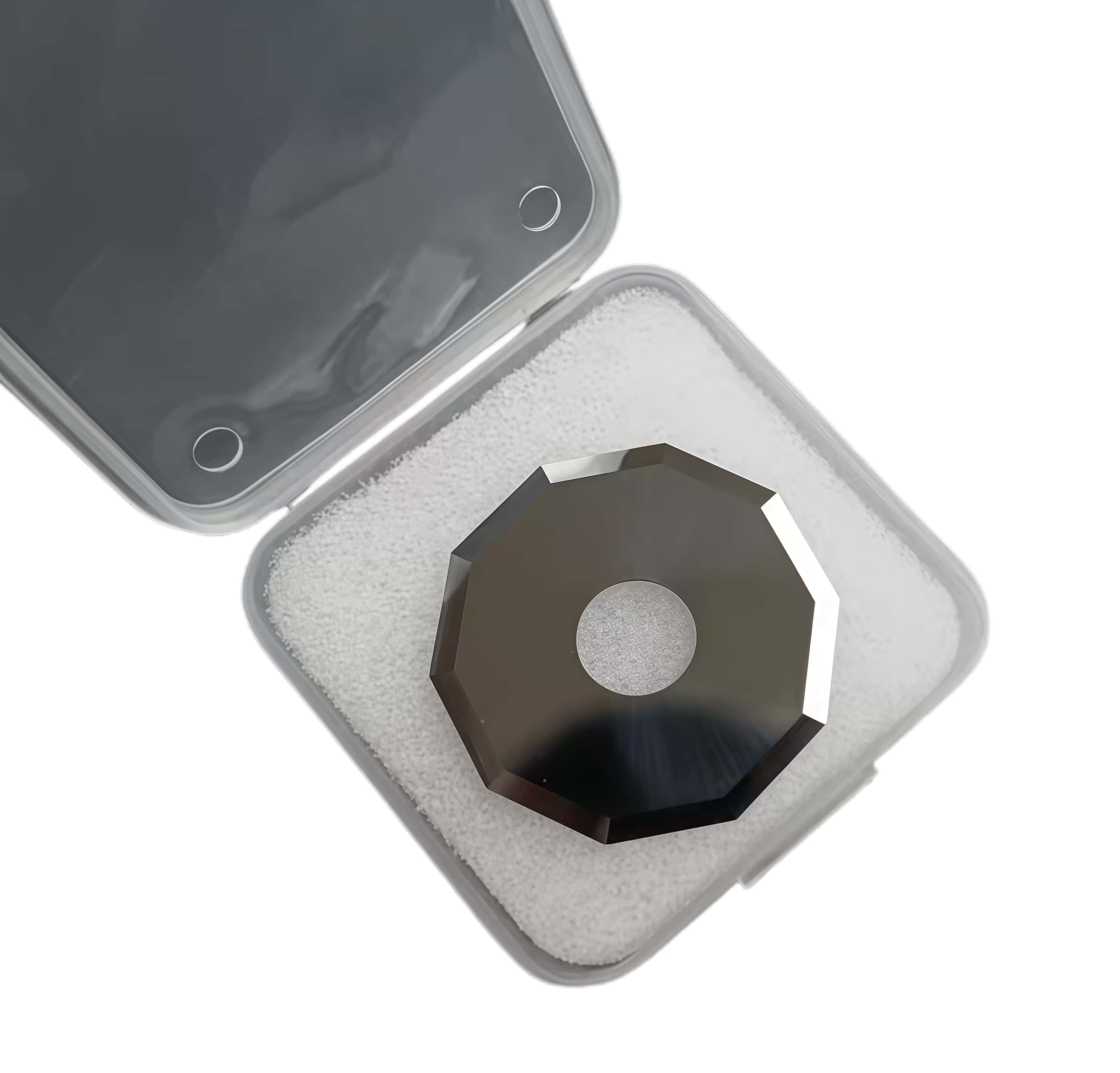
Below is a summary of what I found on the Kuris rotary / circular knife blades with part numbers 64111, 81566, 78559, 83906, 84559: their specifications, differences, and typical applications. (Note: data is from available catalogs, suppliers, and may not be complete — for precise fit and use always check with the machine / blade manufacturer.)
Summary Table: Kuris Blades’ Key Specs & Applications
| Part No. | Outer Diameter / “Knife Height” | Inner Hole / Mounting | Thickness | Cutting Angle | Max Cutting Depth | Geometry / Notes | Typical Applications / Materials |
|---|---|---|---|---|---|---|---|
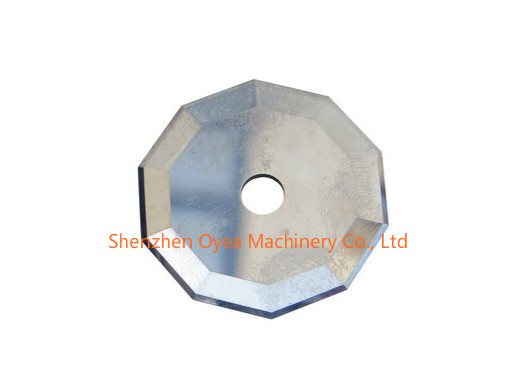
| 64111 | 30.00 mm | Ø 5 mm hole | 1.00 mm | 36° | 5.00 mm | Decagonal (10-sided) rotary blade, carbide (CT) | Aramid, carbon fiber, felt, glass fiber, non-woven, nylon, polyester, textiles |
| 81566 | 44 mm | Ø 12 mm hole | 1.00 mm | (≈ 36° typical) | (not always given) | Decagonal (10-sided) rotary blade, CT carbide | Similar fiber / textile materials, for machines requiring larger blade diameter |
| 78559 | 28 mm | Ø 5 mm hole | 0.30 mm | 36° | 5.00 mm | Decagonal, very thin blade (low cutting force, larger overcut) | Fiber / textile materials where fine cutting control and low cutting force is needed |
| 83906 | 25.00 mm | Ø 8 mm hole | 0.60 mm | 36° | 5.00 mm | Polygonal rotary blade, coated (DLC in some listings) | Same fiber / textile materials, smaller-diameter blade for more compact setups |
| 84559 | 28.00 mm | Ø 8 mm hole | 0.60 mm | 36° | 5.00 mm | Rotary polygonal / decagonal blade, CT carbide | Fiber / textiles (aramid fibers, carbon fibers, felt, glass fibers, non-woven, nylon, polyester) |
Additional Notes & Interpretation
-
All blades share a max cutting depth of about 5.00 mm in the published specs.
-
The cutting (or included) angle is commonly 36° across these blade types (at least where specified).
-
The material / blade quality is often listed as CT (carbide / tungsten carbide), meaning these are hard, wear-resistant blades intended to cut difficult/fibrous materials.
-
Differences among the models are mostly in diameter, thickness, and mounting hole size, which affect compatibility with different machines, cutting force, durability, and overcut (i.e. how far the blade can “bite” or slightly overshoot to ensure clean cuts).
-
Thinner blades (like the 0.30 mm 78559) reduce cutting force and might give finer control, which is beneficial for delicate materials.
-
Larger blades (like 44 mm for 81566) are useful in machines designed for bigger rotary units or needing more cutting “reach.”
-
The hole / mounting diameter is critical to match your machine’s spindle or blade holder (e.g. 5 mm, 8 mm, 12 mm as seen).
-
For 83906, some listings mention a coating (DLC) to extend blade life.
Application & Size Selection Tips
When choosing among these blades, consider the following:
-
Machine Compatibility
-
Ensure the blade’s outer diameter, mounting hole diameter, and thickness fit your cutter’s blade holder.
-
Some machines only support certain blade sizes (e.g. 28 mm, 30 mm, or 44 mm).
-
Check the spindle / arbor size — for example, if your machine uses an 8 mm arbor, the blade must have an 8 mm hole (e.g. 83906, 84559).
-
-
Material to Cut
-
These Kuris blades are typically used for fiber-based / textile / composite materials like aramid, carbon fiber, felt, glass fiber, non-wovens, nylon, polyester, etc.
-
For tougher or abrasive materials, prefer thicker blades or coated blades to resist wear.
-
-
Cutting Quality vs. Force
-
Thin blades reduce cutting resistance (force) but may wear more quickly or be less robust.
-
Thicker blades are more durable but require more cutting power.
-
Consider overcut / allowance in your cutting software when using decagonal or polygonal blades (they “overshoot” edges slightly).
-
-
Blade Life & Coating
-
Blades with coatings (e.g. DLC) may last longer in abrasive environments.
-
Frequent replacement or rotation among identical blades may help maintain consistent cutting quality.
-
-
Application Precision / Edge Quality
-
For high-precision or fine cuts (e.g. in composites, delicate textiles), thinner blades and more advanced blade geometries (multi-edge / decagonal) are preferred.
-
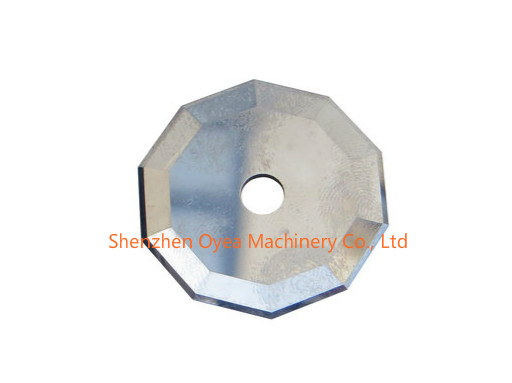
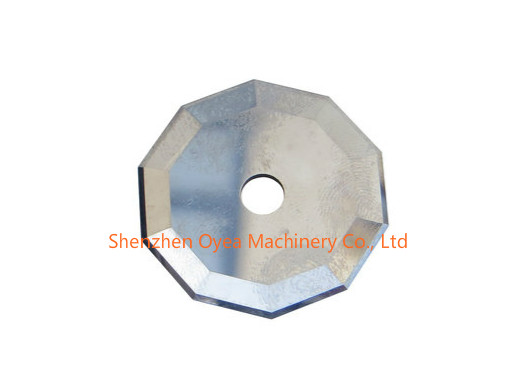
Kuris 64111, 81566, 78559, 83906, and 84559 rotary circular knife blades designed for production, manufacturing, supply, and sales. These blades are ideal for production and manufacturing processes and are available at competitive unit prices. OEM and ODM services are provided for compatible replacement options. Suitable for various applications, these products are offered by Shenzhen Oyea Machinery Co., Ltd. in China.


PREV : CNC Knives for Multicam Ecocam Aristo Axyz Kuris Valiani Digital Cutting Systems NEXT : Brief Guide To Zund Esko Kongsberg Summa Multicam Cnc Router Drill Bits Milling Cutter