

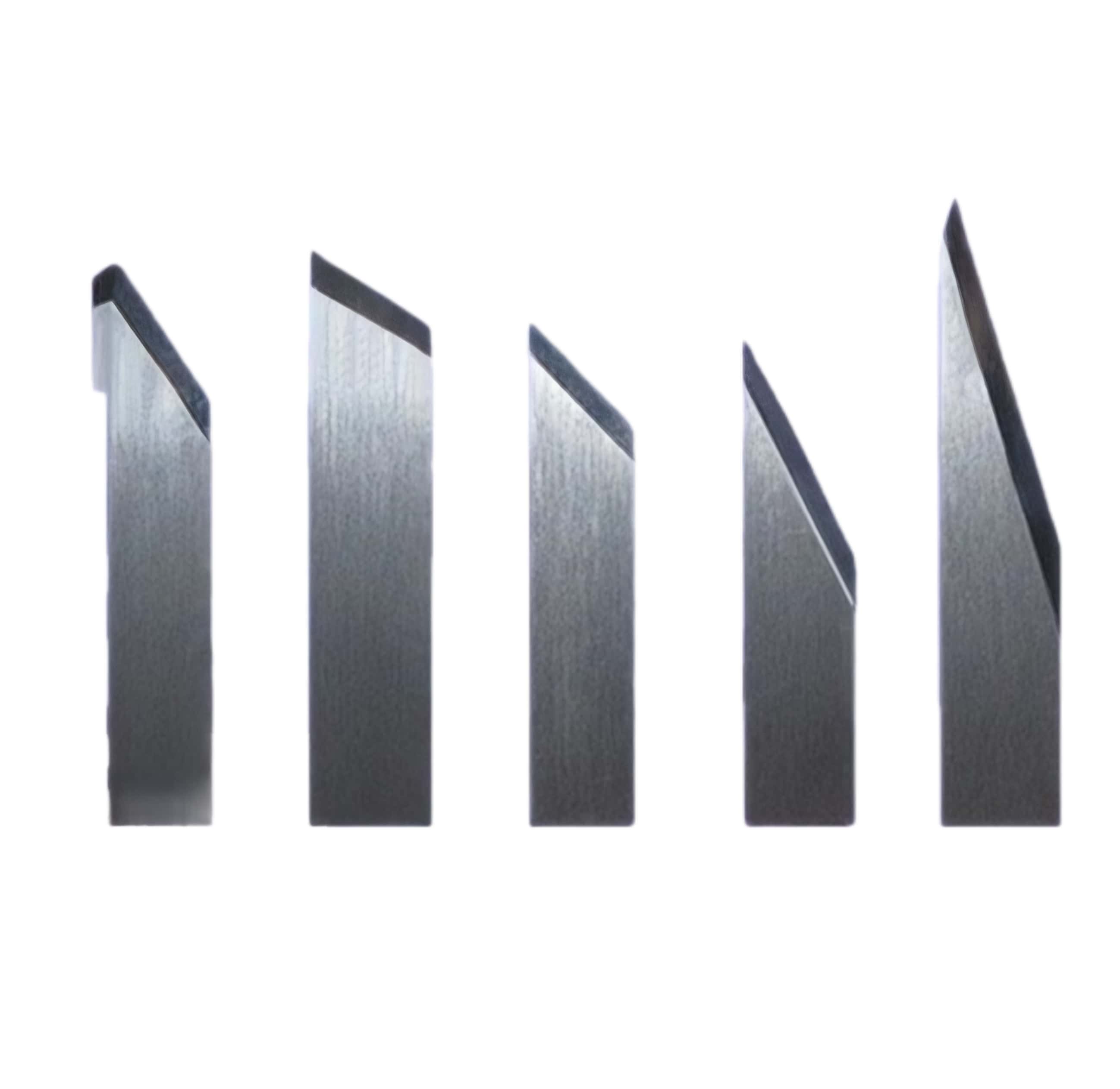
Core manufacturing process
Powder preparation: Tungsten oxide is carburized with carbon at high temperature (above about 1200 °C) to form tungsten carbide powder, which is then mixed with cobalt (or other binders) and sometimes wax or other temporary binders to aid pressing. The mix is milled (e.g., in a ball mill) to achieve uniform dispersion of the binder and controlled grain size.
Pressing and preforming: The powder is pressed in molds (uniaxial or isostatic pressing) to form “green” compacts or preforms that are oversized and relatively fragile. Pre‑sintering may be used to give chalk‑like strength for intermediate machining or shaping before final densification.
Sintering and shrinkage: Green parts are sintered in controlled atmospheres or vacuum at around 1400–1500 °C (about 2000–2700 °F), where the binder melts and the structure densifies, causing significant linear and volumetric shrinkage (often roughly 15–20% linearly, up to about 35% by volume). The result is dense cemented carbide with high hardness and toughness suitable for cutting edges.
Blade finishing and assembly
Grinding and sharpening: After sintering, blades or tips are ground using diamond wheels to achieve final dimensions, tooth forms, and very fine cutting edges, which reduces cutting resistance and improves tool life. Multiple grinding operations (face, top, side) are used to get precise geometry and surface finish.
Brazing or joining to bodies: For carbide‑tipped blades, sintered tips are brazed onto alloy steel bodies (often chrome‑vanadium or similar) using high‑temperature silver braze and flux to fully wet the joint and ensure strong adhesion under heavy loads. The blade bodies are levelled and tensioned for stability at speed, then any features like expansion slots, noise‑reduction slots, or pin holes are added.
Supply and product types
Product forms: The supply chain includes carbide tips, solid carbide blades/knives, and preforms or blanks that can be finished to custom shapes for wear parts, cutting tools, and industrial blades. Suppliers offer both standard items (e.g., staple cutter blades, saw tips) and fully customized blades with specific grades, dimensions, and geometries for different industries.
Industries served: Tungsten carbide blades are widely used for cutting wood, metals, non‑ferrous alloys, plastics, composites, textiles, paper, rubber and tire products, and many other manufacturing and process applications where long tool life and high cutting speeds are required. Global manufacturers can provide high‑volume runs, custom grades, and quick‑turn preforms or finished tools depending on application needs.
Aristo, Atom, Benz, Bullmer, Comagrav, CombiPro, Data Technology, DRD Dierre, Dyss, Ecocam, Elcede, Elitron, Esko Kongsberg, Gerber, Graphtec, Gunnar, Haase, Harmuth, iEcho Science & Technology, Kasemake, Krause, Kuris, Lasercomb, Marbach, Mécanuméric, Mimaki, Misomex, Multicam, Roland, Sei, Summa, Valiani, Wild, and Zund knife blades regrinding services, along with milling bits, router cutters, and routing underlays, are provided by a trusted supplier. This reliable company serves as a producer, manufacturer, wholesaler, and distributor of premium-quality products designed to meet the needs of both wholesale and retail buyers at competitive rates. Their dedication to quality and excellence ensures compliance with high manufacturing standards and optimal product performance.
Oyea stands out as a premier global manufacturer of cutting knives that consistently surpass OEM specifications. Offering a broad selection of standard and custom tools, their products are distributed across Europe, the Americas, the Middle East, and Asia through efficient shipping channels backed by outstanding customer support. With a strong presence in key markets such as Germany, France, the UK, USA, Russia, Vietnam, Thailand, Indonesia, South Korea, Japan, Italy, Australia, Malaysia, Canada, and India among others—their cutting solutions are widely acclaimed for reliability and superior performance on a worldwide scale.
SHARE:


PREV : A Guide to CNC Digital Knife Cutting Tools head & Knife Blades NEXT : Jwei Iecho Aol Ruk Ruizhou Cnc Cutting Machine Flatbed Digital Cutting System Tools