

How to choose and use MLCC (Multi-Layer Ceramic Capacitor) knife blades
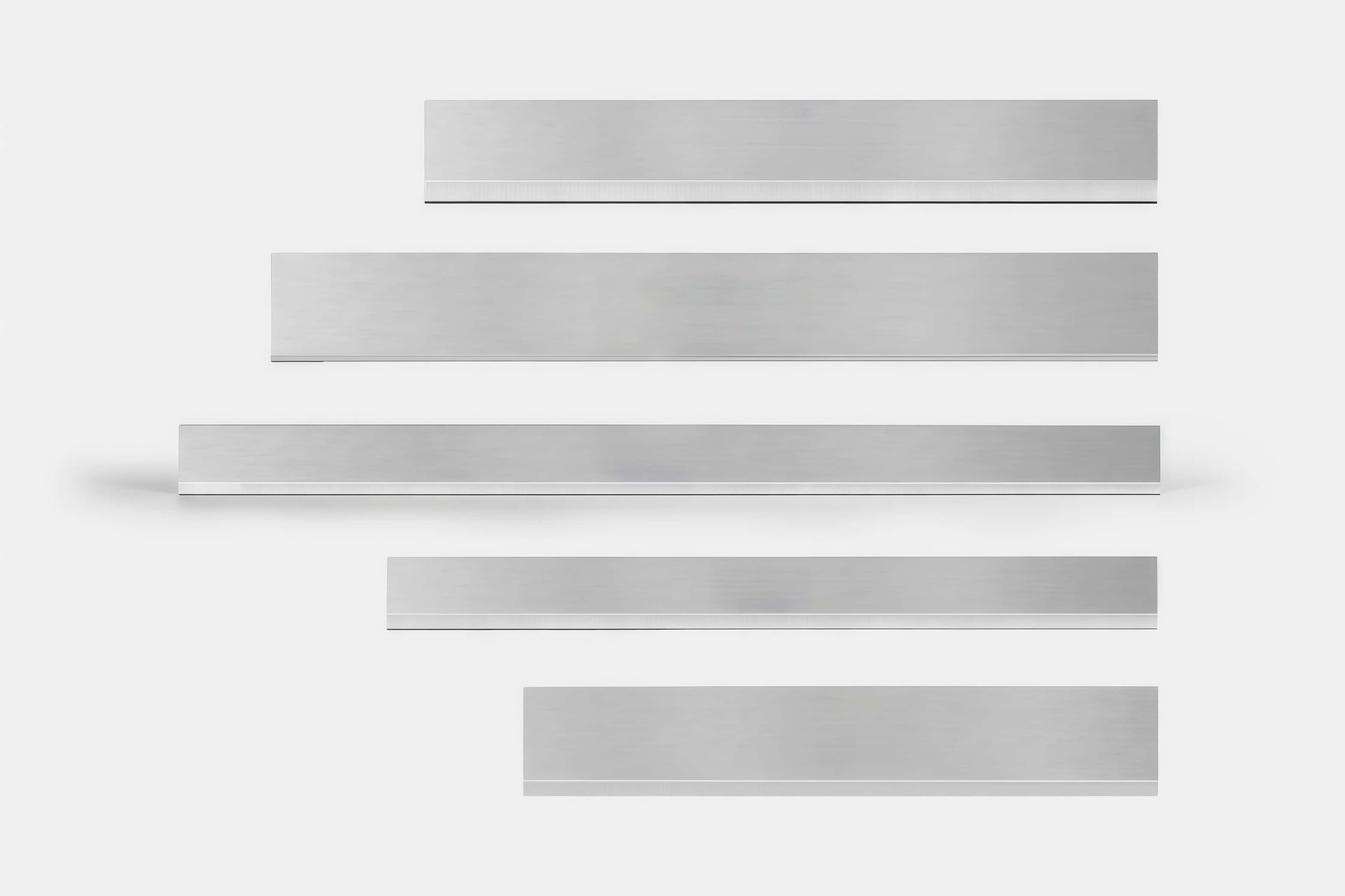
1. Understanding MLCC Knife Blades
Function:
MLCC knife blades are precision cutting tools used for:
-
Green sheet cutting (unfired ceramic sheets with printed electrodes)
-
Chip singulation (cutting individual MLCC chips from sintered blocks)
-
Edge trimming or end-face cutting before electrode coating
They must have:
-
Extremely high precision (sub-micron edge tolerances)
-
Excellent wear resistance
-
Clean cutting without chipping
2. Types of MLCC Knife Blades
| Type | Material | Typical Use | Notes |
|---|---|---|---|
| Tungsten carbide (WC) | Hard and durable | Green sheet cutting | Common, cost-effective |
| Cemented carbide | WC + Co binder | Fired chip cutting | High toughness |
| Ceramic (Al₂O₃, ZrO₂) | Non-metallic, sharp edge | Green ceramic trimming | Brittle, very fine cuts |
| PCD (Polycrystalline Diamond) | Ultra-hard | Fired MLCC singulation | Best for long life and clean cuts |
| CVD diamond-coated carbide | Coated for hybrid performance | Fired chip processing | Balanced durability and cost |
3. How to Choose the Right MLCC Knife Blade
When selecting a blade, consider these parameters:
| Parameter | What to Look For |
|---|---|
| Material type | Match to hardness of workpiece (green ceramic vs fired ceramic) |
| Edge radius | Smaller for green sheets (<0.5 µm), larger for fired parts (1–3 µm) |
| Surface finish | Polished cutting edge reduces burrs and chipping |
| Blade angle | Typical edge angles: 20–40°, depending on cut depth |
| Tolerance | ±1 µm or better for high-end MLCC processes |
| Compatibility | Fit to your MLCC cutting or singulation machine (e.g., Disco, Tokyo Seimitsu, or custom machines) |
4. Best Practices for Use
Installation and Alignment
-
Ensure the blade is seated firmly with no runout (use precision holders).
-
Use alignment jigs to keep blade parallel to the work table within ±2 µm.
Cutting Parameters
-
Green sheet cutting:
-
Cutting speed: 5–50 mm/s
-
Pressure: low (to prevent deformation)
-
-
Fired MLCC cutting:
-
Feed rate: 0.1–0.5 mm/s
-
Use fine coolant or air blast to remove debris
-
Maintenance
-
Inspect under microscope (≥100× magnification) for edge wear or chipping.
-
Clean with non-abrasive solvents; avoid ultrasonic cleaning for PCD blades.
-
Rotate or flip if double-edged, before edge degradation reaches 5–10 µm.
Storage
-
Keep blades in anti-static, padded cases.
-
Avoid humidity >60% RH for carbide types to prevent oxidation.
5. Common Issues & Fixes
| Problem | Cause | Fix |
|---|---|---|
| Edge chipping | Excessive feed rate or impact | Reduce speed, improve alignment |
| Burr formation | Dull edge | Regrind or replace blade |
| Cracked MLCCs | Blade vibration or misalignment | Tighten mount, balance holder |
| Uneven cut width | Uneven wear | Rotate or replace blade |
Shenzhen Oyea Machinery Co., Ltd. specializes in the production and manufacturing of tungsten steel capacitor cutting knife blades, specifically designed for Multi-layer Ceramic Capacitors (MLCC). The company offers wholesale sales directly from the source factory, ensuring top-notch quality and reliable supply. They also provide OEM services to meet customized requirements, establishing themselves as a trusted name in the industry within China.


PREV : What Materials Are Best Suited For The Zund Z10, Z11, Z12, Z13,Z83 Z101 Blades NEXT : A Care & Use Guide For Atom Esko Summa Zund Tungsten Carbide Knife Blade