

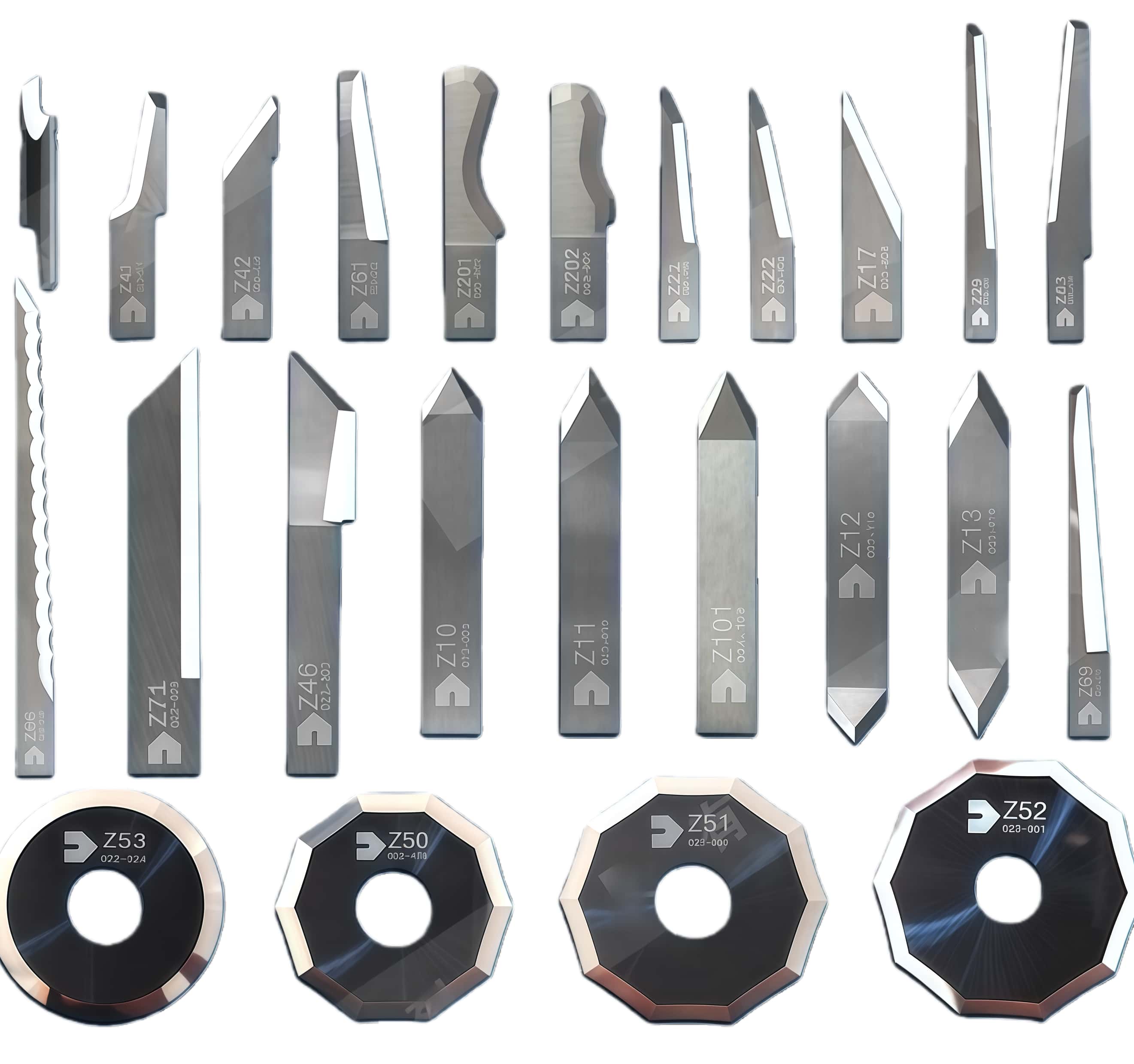
Blade overview & recommended materials
These blades are all drag/knife‐style blades (often tungsten carbide) for flat-stock cutting in Zund systems. According to available information:
| Blade | Max cutting depth / thickness |
Typical recommended materials |
|---|---|---|
| Z10 | ~4.8 mm (cut depth) | Tarpaulin, PVC banners, reflective vinyl, polypropylene, coated textiles, folding carton, vinyl, hard foam core, corrugated plastic, magnetic foil, polycarbonate, polyester fabric. |
|
Z11 |
(similar to Z10) |
Materials similar to Z10 (hard foam, vinyl, CPP, etc) and for tougher cuts. |
|
Z12 |
“Same parameters as Z10/Z11” (according to some supplier info) |
Corrugated paper, leather, foam, plastics, etc. |
|
Z13 |
(also similar drag‐knife) |
Comparable to Z12/Z11 – tough plastics, carton, etc. |
| Z83 |
Listed as “centric, asymmetrical for ridge‐free cuts” (for heavier/harder material) |
PVC, polycarbonate, folding carton, hard foam. |
| Z101 |
Deeper cutting depth (~6.8 mm) according to one source. |
More demanding materials: thicker plastics, rigid boards, etc. |
Depth / thickness are often “max cutting depth” values or guidelines; actual achievable depth will depend on substrate, machine settings, tool head, and backing.
What this means for material selection
-
Because these blades are knife/drag style (not oscillating or routing), they are most effective on flat stock materials of up to moderate thickness (often < ~5 mm for many of these blades, though Z101 can go deeper).
-
These blades are suitable for soft to semi-rigid materials: vinyl, banners, textiles, coated fabrics, foam, corrugated plastics, folding cartons, magnetic foil, etc.
-
For very rigid plastics, thick boards (e.g., > 5mm), dense composite sheets or hard foam boards, you might need a deeper‐cutting blade (like Z101) or switch to a routing/oscillating blade/tool head.
-
For ultra thin films or textile materials, some blades might be overkill or cause damage—so fine blades or special tools may be better.
- Zund Z10 blade: Made of solid tungsten carbide, designed for high durability. Best for cutting aramid fiber prepreg (e.g., Kevlar), carbon fiber prepreg, fiberglass prepreg, composite textiles, canvas, corrugated plastic, hard foam, vinyls, folding carton, paper, polycarbonate, polyester fabrics, tarpaulin, PVC banner, and self-adhesive vinyls.
- Zund Z11 blade: Made of tungsten carbide with a 60° angle, suitable for canvas, cardboard, foil, footwear materials, gasket materials, hard foam, hard plastic, magnetic foil, paper, plastic, polycarbonate, polyester fabric, PVC, self-adhesive foil, sole material, and tarpaulin.
- Zund Z12 blade: A double-edged drag blade made of tungsten carbide, with a 50° flat shank. Suitable for cutting canvas, cardboard, foil, shoe materials, gasketing materials, hard foam, hard plastics, magnetic foil, paper, plastic, polycarbonate, polyester fabric, PVC, self-adhesive foil, shoe soles, and tarpaulin.
- Zund Z13 blade: Made of tungsten carbide (VHM - hard metal), with a cutting depth of 7mm. Optimal for polyester, PVS, paperstock, carton, vinyl, light plastic, and polypropylene.
- Zund Z83 blade: A carbide knife asymmetric flat-stock blade suitable for cardboard, hard foam, magnetic foil, polypropylene, and polycarbonate.
- Zund Z101 blade: Made of super tungsten carbide (super hard metal SHM), designed for high performance with magnetic foil and plastic sheet (polypropylene) cutting.
Each blade is designed for specific materials commonly used in digital cutting applications, primarily composite materials, various fabrics, plastics, paper products, and vinyls. The tungsten carbide construction is a common feature for durability and precision.


PREV : Zund Z10 Z11 Z12 Z13 Z44 Z45 Digital Cutter Compatible Knife Blades NEXT : How Do Sinajet Blade Numbers N17, Y17, And Y24 Map To Specific Cutter Models