

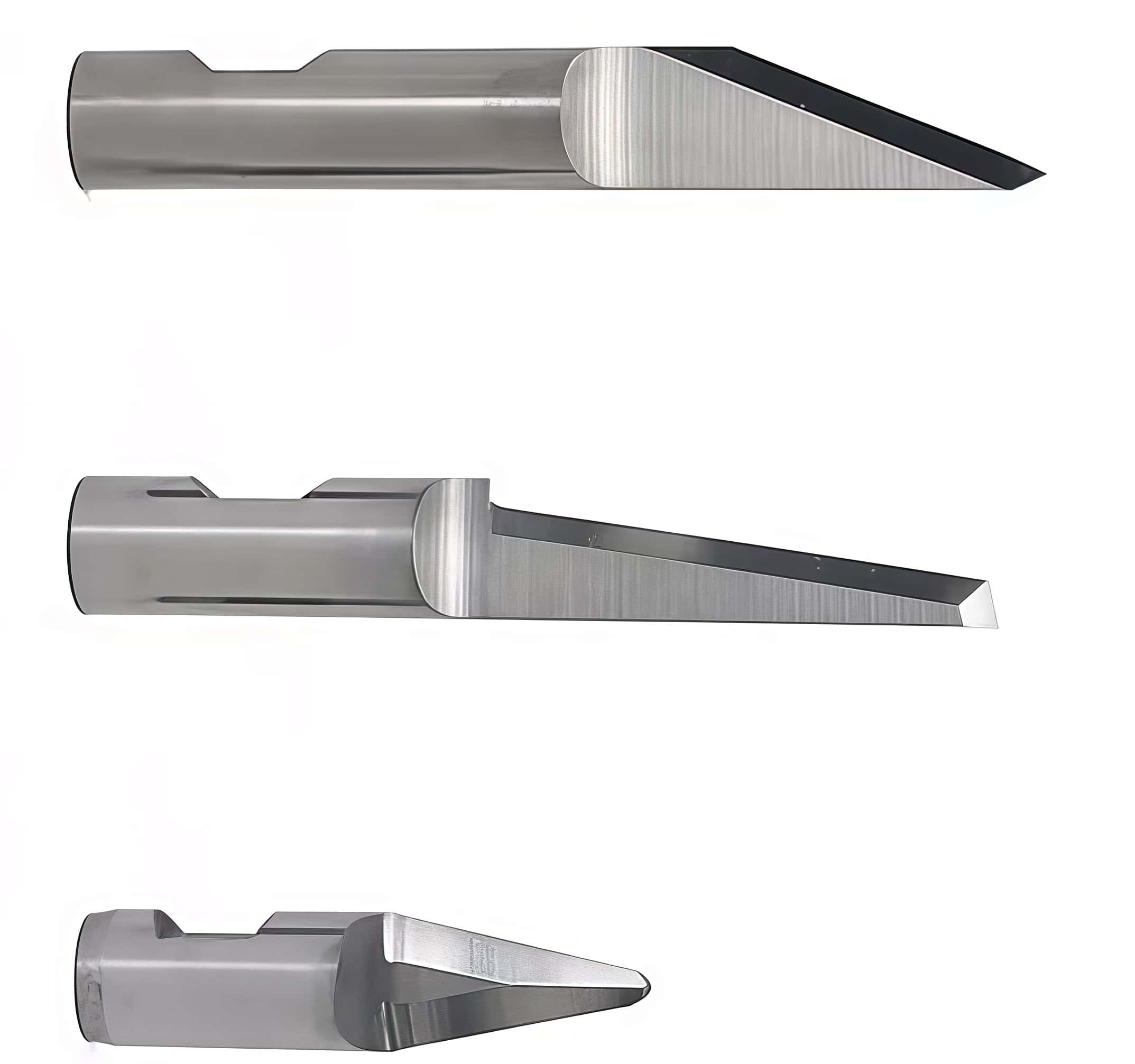
- Tip Profile: Straight edge with a centered, single-sided angle.
- Best for: Standard, thin materials and multi-ply cutting. Excellent for vinyl banners, self-adhesive vinyl, folding carton, technical canvas, and thin foam board.
- Advantage: Delivers low "overcut" lag so the tool tracks perfectly through small radii and intricate details without tearing.
- Tip Profile: Two cutting edges terminating at a centered tip.
- Best for: Heavy-duty applications. Ideal for thicker cardboard, corrugated plastic up to 5mm, and rigid plastics.
- Advantage: Provides twice the service life of single-edge blades because the machine can often cut in both directions, or you can reverse the blade.
- Tip Profile: Double edges that are asymmetrically ground.
- Best for: Display carton, rigid foamed PVC, and dense gasket materials.
- Advantage: Minimizes edge-burring and flags on one side of your cut, although it requires line direction control during programming.
- Tip Profile: Angled or spear-headed (often 30° to 60°) used in rigid V-notch or oscillating tools.
- Best for: Deep-cut foam, structural honeycomb boards, and specialized V-cuts for 3D packaging displays.
- For thinner materials, choose a blade with a smaller flat cutting angle (e.g., 30° to 45°) to preserve tip integrity.
- For rigid, thicker stock up to 20-30mm, use more robust, long-life blades with cutting angles around 40° to 87° depending on the tool holder.
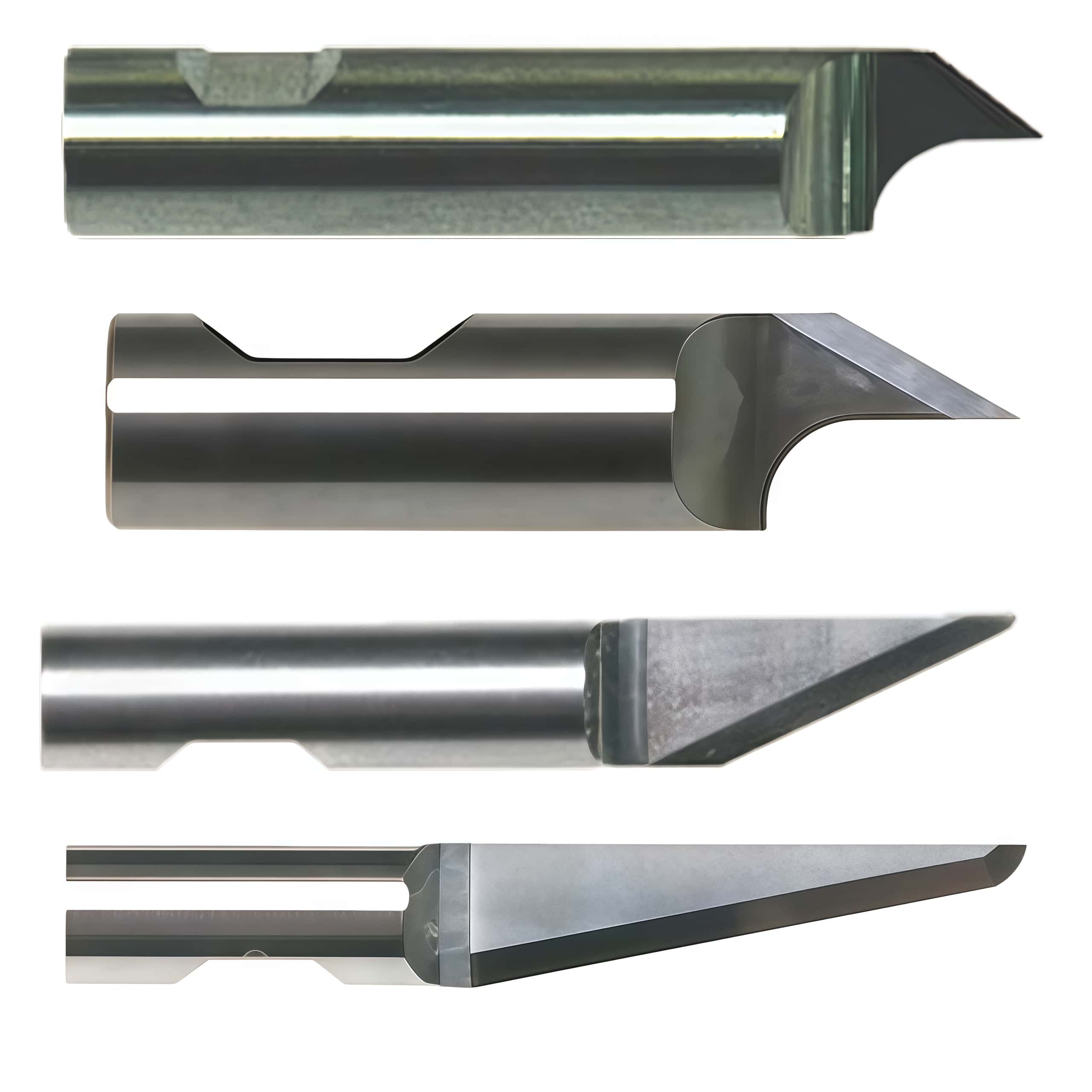
Manufacturer Equivalency Quick-Reference
|
Primary Function |
Esko Kongsberg Model |
Aristo Equivalent |
MultiCam / K-Code Equivalent |
|
Standard Corrugated |
BT-57265 (K6) |
||
|
High-Speed Display Board |
BT-57267 (K4) |
||
|
Thick Foam / Insulation |
BT-56240 (K92) |
||
|
Technical Gaskets / Plastics |
BT-2392 (K24) |


PREV : Ronchini Massimo Cnc Cutting And Milling Systems Knives Knife Blades NEXT : How To Install Replacement Summa Zund Esko Multicam Drag Carbide Knife Blades On My Cutter